Can Solar Panels Run AC, Fridge & Washing Machine? (2026 Guide)
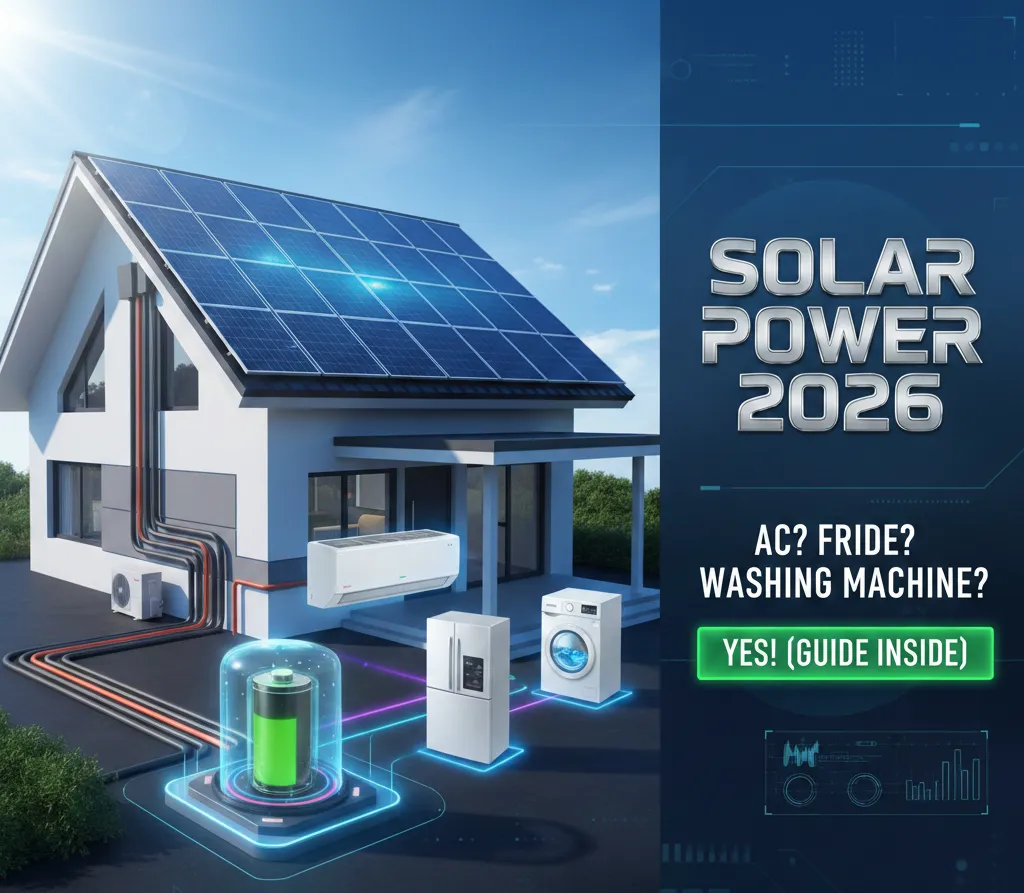
With electricity bills soaring and increasing energy demand in Indian households, many people are asking: Can solar panels power heavy appliances like ACs, fridges, and washing machines?
The answer is yes, but it depends on the solar system capacity, appliance usage, and storage setup. In this detailed 2026 guide, we’ll break down how solar energy can run your essential home appliances, system sizing, costs, and tips for maximum efficiency.
How Solar Panels Work
Solar panels generate electricity from sunlight. The electricity produced can either:
- Power appliances directly during the day
- Charge a battery for nighttime usage
- Be exported to the grid via net metering
Most modern inverters and hybrid solar systems can handle standard household loads efficiently.
Can Solar Panels Run an Air Conditioner?
ACs are one of the highest energy-consuming appliances in Indian homes. Here’s what you need to know:
- A 1.5-ton AC typically consumes 1.2–1.5 kW per hour.
- To run an AC for 5–6 hours a day, you need at least a 3 kW solar system (depending on sunlight hours).
- If you use battery storage, ensure it can handle AC consumption during evenings or cloudy days.
Using energy-efficient inverter ACs can significantly reduce solar system size and costs.
Running a Fridge on Solar
Refrigerators are essential, but their power usage is lower than ACs:
- Standard fridge: 150–250 watts/hour
- Large fridge: 300–400 watts/hour
Even a 1 kW rooftop solar system can easily power a fridge, along with lighting and small appliances, for the whole day.
Tip: Place the fridge in a shaded area to reduce load and increase energy efficiency.
Can Solar Power a Washing Machine?
Washing machines consume about 500–800 watts per load, with occasional peaks during spin cycles.
- A 2–3 kW rooftop solar system can handle regular washing machine usage along with other appliances like fans, lights, and a fridge.
- Hybrid solar + battery systems allow washing during the night without relying on the grid.
Sizing Your Solar System for Multiple Appliances
To run an AC, fridge, and washing machine simultaneously:
- Calculate total daily load:
- AC: 1.5 kW × 5 hours = 7.5 kWh
- Fridge: 0.2 kW × 24 hours = 4.8 kWh
- Washing machine: 0.8 kW × 1 hour = 0.8 kWh
- Total = ~13 kWh/day
- Required solar system (depending on sunlight):
- 4–5 kW rooftop solar panels
- Optional battery storage: 10–12 kWh
This ensures your essential appliances run reliably in Indian households.
Costs in India (2026)
Approximate rooftop solar system costs:
| System Size | Approximate Cost (INR) | Subsidy Eligible |
|---|---|---|
| 1 kW | ₹55,000–₹75,000 | Yes |
| 3 kW | ₹1,40,000–₹1,80,000 | Yes |
| 5 kW | ₹2,50,000–₹3,20,000 | Yes |
Government schemes like PM Surya Ghar Muft Bijli Yojana and net metering reduce payback period, often to 4–5 years. After that, electricity is essentially free.
Tips for Running Appliances Efficiently on Solar
- Use energy-efficient appliances: Inverter ACs, LED lights, and energy-rated fridges.
- Avoid simultaneous heavy loads if your system is smaller than needed.
- Use battery storage wisely: Prioritize AC and fridge during evenings.
- Optimize solar production: Keep panels clean and unshaded.
- Monitor usage: Smart inverters allow tracking electricity consumption via apps.
Advantages of Solar-Powered Appliances
- Lower electricity bills: Reduce dependency on grid electricity.
- Reliable power: Essential during power outages.
- Environmentally friendly: Reduces carbon footprint.
- Energy independence: Produce your own electricity.
In India, with rising tariffs and abundant sunlight, solar power can efficiently run even energy-intensive appliances.
Final Verdict
Yes, solar panels can run your AC, fridge, and washing machine — provided the system is sized correctly. Combining rooftop panels with batteries and energy-efficient appliances ensures uninterrupted operation.
In 2026, solar energy is not just for lighting — it’s a complete solution for modern Indian households.