Solar Water Heater in India 2026: Costs, Benefits, and Installation Guide
☀️ What Is a Solar Water Heater?
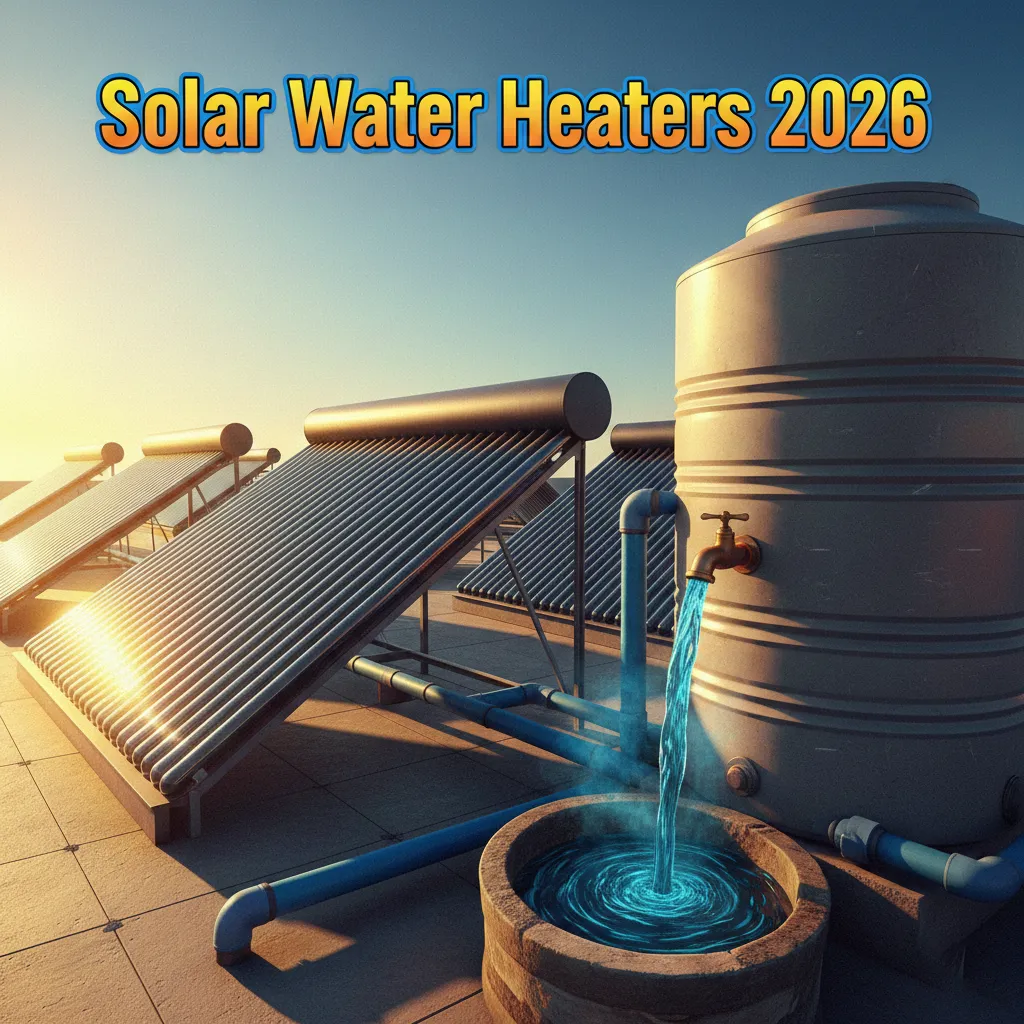
A solar water heater uses solar thermal energy — the sun’s heat — to warm water for homes, businesses, hotels, hospitals, and more. It’s a simple technology that replaces or reduces the need for electric or gas water heaters.
Solar collectors capture sunlight; that heat is transferred to water and stored in an insulated tank for use throughout the day.
🔧 How It Works (in Simple Terms)
- Solar collectors (flat plate or evacuated tubes) face the sun on your roof.
- These absorb heat and transmit it to water flowing through pipes.
- Heated water goes into a well‑insulated storage tank ready for showers, washing, or kitchens.
- Some systems include electric or gas backup for cloudy days.
📊 Types of Systems
| Type | Best For | Pros | Cons |
|---|---|---|---|
| Flat Plate Collector (FPC) | Large households | Durable, long life | Slightly higher cost |
| Evacuated Tube Collector (ETC) | Budget‑friendly | Good efficiency, especially colder months | Glass tubes are fragile |
Both major types are widely used in India; your choice depends on climate, budget, and space.
💸 Cost in India (2026 Estimates)
The price mainly depends on capacity (liters per day), technology, brand, and installation:
📌 Typical Residential System Prices:
- 100 LPD: ₹15,000 – ₹30,000
- 200 LPD: ₹30,000 – ₹60,000
- 300+ LPD: ₹40,000 – ₹80,000+
(Installation charges may add ₹3,000–₹10,000 more)
Return on Investment: Most homeowners recover installation cost in 2–4 years through energy savings.
💡 Why It’s Worth It
1. Huge Energy Savings
Solar heaters can cut water heating energy costs by 50–80% or more, meaning much lower electricity or LPG bills — especially in sunny places.
2. Environmental Benefits
You reduce carbon emissions and reliance on fossil fuels — good for both planet and health.
3. Low Maintenance
These systems last 15–20 years with simple annual servicing (cleaning collectors, checking pipes).
4. Increases Home Value
Homes with renewable energy features often have higher resale appeal.
🚩 Things to Consider Before You Install
✔ Roof Space & Orientation: South‑facing, unshaded roofs give best performance.
✔ Daily Water Needs: Larger families need bigger systems.
✔ Backup Heating: Some owners add electric backup for cool winter mornings.
✔ Local Climate: Performance peaks in sunny regions but can still work with hybrid solutions.
🏛️ Government Subsidies and Support (2026)
The Indian government — through the Ministry of New and Renewable Energy (MNRE) and state agencies — supports solar adoption with subsidies to reduce the upfront cost of solar water heaters.
✅ Many states offer 30–50% subsidies or incentives, depending on local policy and scheme.
📝 Check with your State Renewable Energy Development Agency or official government portals for the latest programs and eligibility.
🛠️ Installation Tips
🔹 Always hire a professional installer — correct tilt, plumbing, and insulation matter.
🔹 Ensure BIS/quality standards are met for collectors and tanks.
🔹 Clean glass tubes or FPC surfaces every few months to maintain efficiency.
🔹 If your morning water is cold in winter, consider hybrid systems or backup heaters. (Some users report less heat early morning in winter without backup).
📌 Final Thoughts
A solar water heater in India in 2026 is not just an eco‑friendly choice — it’s a smart financial investment. ₍With rising electricity costs and strong solar potential across most of India’s climate zones, the payback is faster than many other home upgrades.₎
Bottom line: If you have sunny roof space and a desire to save on energy bills while reducing your carbon footprint, solar water heating is definitely worth considering in 2026.